In this months issue of Cleaning & Restoration Magazine, published by the Restoration Industry Association (RIA), we learned the potential risks and proper care needed with Compact Fluorescent Lights (CFL). (Written by Michael A. Pinto, CSP, CMP, CEO of Wonder Makers Environmental, Inc )
We as people continue to look for ways to "go green," lessen our environmental footprint, and - save money! In doing so, innovative products have come to our store shelves, and the push to make small changes in order to make a big impact is all around us.
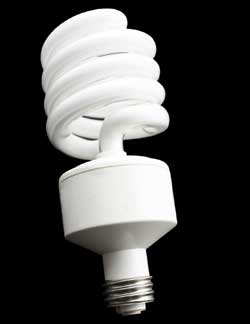 Multiple electricity providers have given the incentive to change from incandescent bulbs to the eco-energy friendly CFL's (those twisty tubes we all know so well). Yet, like most things in life, there is a negative side to the benefit of these bulbs.
 Although they wont cause heartburn, gas or indigestion (thank you Pepto-Bismal), they can cause some serious health effects if these suckers break. Without getting into the scientific details, the simple fact is, they contain mercury. If the bulb breaks, the mercury can be released as a vapor and dust into the air, contents, and even the carpet around us.
Some may shrug their shoulders and turn there head - thinking "What could a little mercury hurt? It's not like I'm going around breaking light bulbs for fun." Unfortunately, the amount of mercury in one standard CFL "is enough to contaminate up to 6,000 gallons of water beyond safe drinking levels" per a Stanford University research report. That's a big deal!
So - what do we do about it? First, we identify the potential risks. If you choose to use the CFL's for the benefits they do have (I know I do), then we must be prepared.
The EPA has laid out a clean-up plan for homeowners: http://www.epa.gov/cfl/cflcleanup.pdf
I would print this out, and keep it handy (maybe with all the other in-case-of-an-emergency documents). You can also call an EPA Certified Company to clean up for you, such as - you guessed it - Titan Restoration 480-649-5050.
The last thing I would like to note, is how to dispose of the CFL's. Like many other items, such as batteries, we don't want these in our local landfills. As shown below, when one goes out - take it back to where you bought it.
"The retail price includes an amount to pay for recycling, and manufacturers and importers have an obligation to collect and recycle CFLs. Safe disposal requires storing the bulbs unbroken until they can be processed. In the U.S., The Home Depot is the first retailer to make CFL recycling options widely available." http://en.wikipedia.org/wiki/Compact_fluorescent_lamp


